Free tool
Sodium & salt intake calculator
Enter your estimated daily sodium or salt intake and see how it lines up against public health guidelines from WHO, DGE, and the AHA - with the source cited for every number.
Your daily intake
See it in Sam
Track this over time, not just once
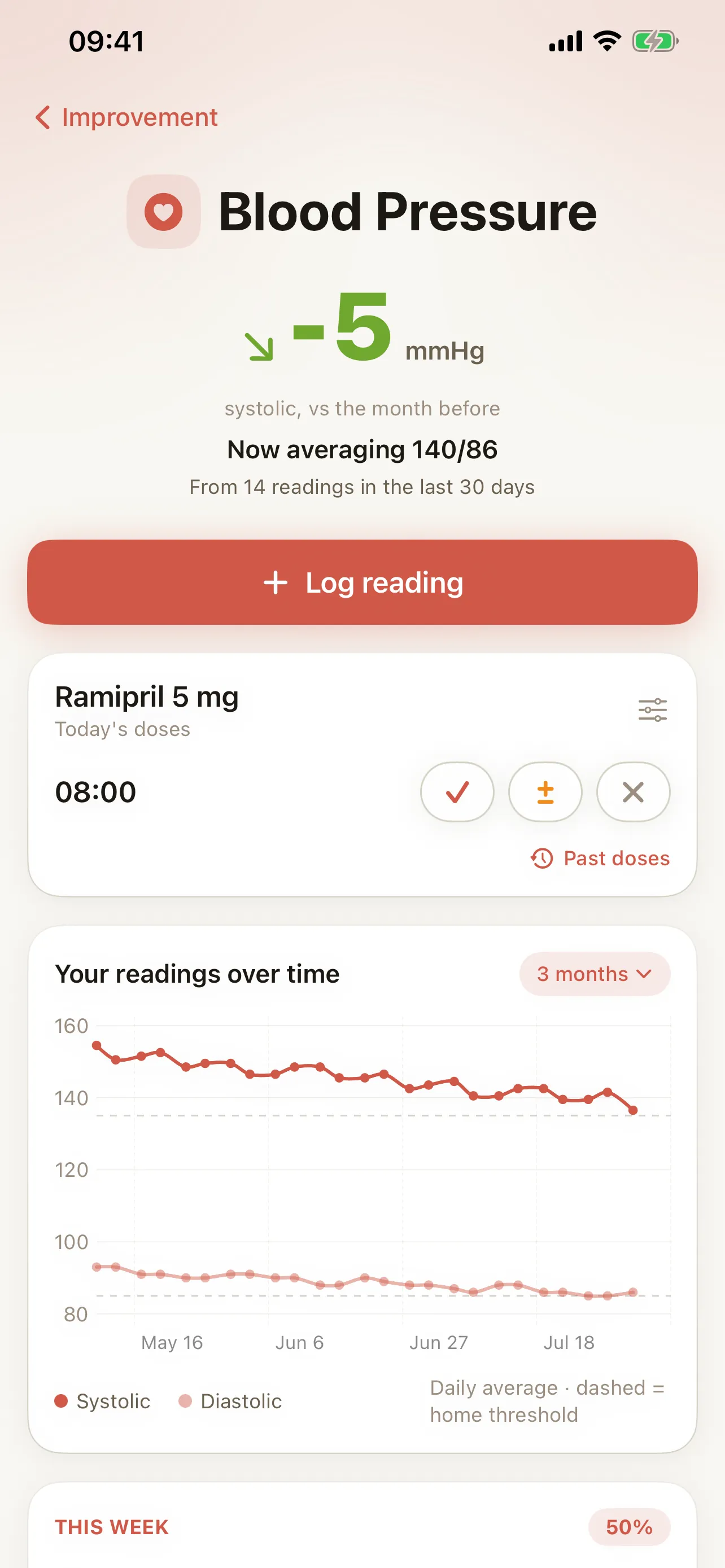
This calculator gives you one number. Sam's High Blood Pressure program pairs a monthly Mediterranean-diet check-in with your own Apple Health trends, so you can see how your habits move over time.
A monthly diet check-in
Once a month, Sam asks the MEDAS-14: 14 questions on a Mediterranean diet, from the PREDIMED study. Your result runs from 0 to 14. The questionnaire looks at diet only. You keep track of your medication and your readings elsewhere in Sam.
- Resting heart rate as a trend
- Your activity without writing it down
- A PDF for your doctor's visit
Where sodium usually comes from
Most dietary sodium doesn't come from the salt shaker - it's already in processed and prepared foods. These categories are typically the largest contributors:
Processed & cured meats
Ham, salami, bacon and other cured or smoked meats are salted as part of preservation, not just seasoning.
Ready meals, soups & stock cubes
Packaged soups, instant meals and bouillon cubes concentrate sodium for flavor and shelf life.
Bread & baked goods
Bread is eaten often enough that even a moderate amount per slice adds up over a day.
Cheese & dairy
Many cheeses use salt as part of curing and preservation, not only for taste.
Sauces, condiments & dressings
Soy sauce, stock, ketchup and salad dressings add sodium in small servings that are easy to underestimate.
Salty snacks
Crisps, pretzels and salted nuts are salted directly on the surface, where it's most noticeable.
Most international guidance names sodium limits in milligrams, while nutrition labels in Europe usually list salt in grams. This tool converts between the two and places your estimate next to reference points from three public health bodies, so you can see where you stand - not a diagnosis, just a comparison.
Questions about this calculator
This calculator compares a self-reported number against published guideline figures. It is general information, not medical advice, and it does not diagnose, treat, or measure anything about your health. Sam does not measure blood pressure or sodium intake directly. For guidance specific to your situation, talk to a doctor.