Living with Panic Disorder

Understand Your Panic Patterns

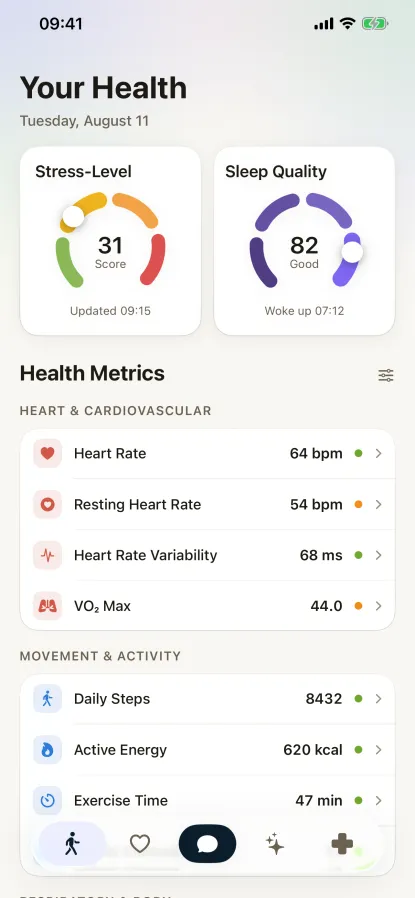
Sam shows you your Apple Health data (sleep, heart rate, stress levels, and activity) compared to your personal baseline, helping you understand your patterns and prepare for conversations with your care team. Sam cannot automatically detect or predict panic attacks - no wearable can. If you're experiencing chest pain or shortness of breath, especially for the first time, seek emergency medical care immediately.

Works with Apple Watch, Oura, Whoop & GarminGDPR-compliant, built in Europe
Sam App: Gesundheitsdaten im Überblick bei Panic Disorder

Your data

The metrics that often come up in everyday life with Panic Disorder.

Your wearable already captures them. Sam reads them from Apple Health and shows you how they shift against your personal baseline.

Resting Heart Rate
Heart Rate Variability
Respiratory Rate
Sleep Duration
Stress Level
Recovery Minutes
Resting Heart Rate
Heart Rate Variability
Respiratory Rate
Sleep Duration
Stress Level
Recovery Minutes
Resting Heart Rate
Heart Rate Variability
Respiratory Rate
Sleep Duration
Stress Level
Recovery Minutes
Resting Heart Rate
Heart Rate Variability
Respiratory Rate
Sleep Duration
Stress Level
Recovery Minutes

How Sam accompanies you day to day with Panic Disorder

Sam reads the data your wearable already writes to Apple Health and compares it to your personal baseline - understandable, not a wall of numbers.

1

Sleep and anxiety often go hand in hand

Sleep disruption is common in panic disorder, and poor sleep can fuel anxiety cycles. By tracking how much you sleep each night against your personal baseline, you can start to spot whether lower-sleep nights align with days you feel more tense or on-edge. This insight helps in conversations with your care team.

2

Understand your stress patterns

Tracking daily stress lets you see which parts of your week or which activities tend to raise your stress level. Over time, these patterns can reveal potential triggers or vulnerable windows. Sharing this data with your doctor helps them understand your real-life experience and tailor their support.

3

Heart rate trends show your baseline, not fear

When anxiety hits, heart rate often rises. But without knowing your personal baseline and normal daily variation (from caffeine, exercise, time of day), every spike can feel alarming. Seeing your typical resting heart rate and heart-rate variability helps you recognize normal fluctuations, putting your physiology in context.

Sam is a wellness companion, not a medical device. The app does not diagnose, treat, cure, or prevent any illness and does not replace medical advice. Consult a qualified healthcare professional for medical decisions.

Inside the Medical Program

How the Panic Disorder Medical Program works.

A structured place to log what's happening, get medication reminders where relevant, and check in monthly - all building toward a report for your next appointment.

Log an attack in your own words

Note whether an episode felt expected or came out of nowhere, rate how intense the fear felt from 0 to 10, and check off which of 13 plain-language body sensations you noticed, like a racing heart or shortness of breath. You can add what helped and describe the situation freely - Sam records what you report, not an automatic verdict on what happened.

A monthly check-in with OASIS

Once a month, Sam asks you to fill out the OASIS - the same short, five-question tool clinicians use to gauge anxiety severity and its impact on daily life. It's a quick snapshot you can bring to your next appointment.

Sam never decides for you whether an episode was a panic attack - the attack log only records what you report, so what you see back is always your own account, not an automatic diagnosis.

Every Medical Program builds toward your monthly doctor-report PDF, alongside your measured context (sleep, activity, and more where relevant).

Understand, don't guess.

Sam translates your numbers into clear answers and a report you can take with you.

Ask Sam about your data

Instead of interpreting charts, you ask questions - Sam answers from your own numbers. For example:

Why has my stress level been so high this past week?
Your stress scores have averaged 7 out of 10 this week. That's about 2 points above your typical baseline of 5. You also had two days rated 9 or higher.
Could this be triggering more anxiety for me?

A report for your next doctor's appointment

The monthly PDF report sums up your weeks objectively - for appointments, applications, or simply your own record.

Monthly Report - June

Your Health Overview

Sleep

07:10Average
23:50Bedtime
71Score

Stress level

38Avg (score)
-6vs. baseline
22Days logged
Created by Sam HealthPDF

Beispielwerte. Dein Bericht basiert auf deinen eigenen Daten - automatisch, ohne Tagebuch.

Articles about Panic Disorder

Further reading: what wearable data can show about everyday life with Panic Disorder - and where its limits are.

2 min read

Panic Disorder or Generalized Anxiety Disorder?

Panic attacks and constant worry both feel exhausting, but they're different anxiety disorders. Learn the pattern differences and how to find the right support.

5 min read

Tracking Panic Attack Patterns for Your Doctor

Recognize panic attack patterns and document them effectively. Records help your healthcare provider understand your experience and inform your care plan.

Frequently Asked Questions

Can Sam detect or predict my panic attacks?+

No. No wearable can reliably detect or predict panic attacks. Sam shows you your Apple Health data: sleep, stress, heart rate, and activity, so you can track your own trends and patterns. If you think you're having a panic attack or experiencing chest pain for the first time, seek emergency medical care. A qualified doctor can evaluate your symptoms.

Why is my heart rate so high? Could it be a panic attack?+

A raised heart rate has many causes: stress, caffeine, exercise, heat, illness, or anxiety. Sam helps you see what your typical resting heart rate is, so you can tell whether a spike is unusual for you. But if you're experiencing chest pain, shortness of breath, or other symptoms that feel new or concerning, do not wait to self-diagnose. Call emergency services or your doctor right away.

What's the difference between a panic attack and a heart attack?+

Both can involve sudden chest pain, shortness of breath, and a rapid heartbeat. This overlap is why early medical evaluation matters. A heart attack is a medical emergency requiring immediate care. A panic attack, while extremely distressing, is not immediately life-threatening. Because symptoms overlap, never assume chest pain is 'just' panic, especially the first time. Always seek emergency care if you're unsure. Your doctor can help you tell the difference once cardiac causes are ruled out.

How is panic disorder treated?+

Panic disorder is treatable through approaches including cognitive-behavioral therapy (CBT), medications such as SSRIs or SNRIs, and lifestyle changes. The right treatment depends on your individual situation and is something to discuss in detail with your doctor or mental-health professional. They can recommend what's best for you.

What should I do if I think I'm having a panic attack?+

If this is your first panic attack or your symptoms include chest pain, shortness of breath, or anything that feels medically urgent, call emergency services. Once cardiac and other medical causes have been ruled out by a doctor, grounding techniques (such as slow breathing or focusing on your senses) can help during an attack. A therapist or doctor can teach you specific coping strategies tailored to panic disorder.

Can tracking my data help me manage panic disorder?+

Tracking sleep, stress, and activity can be useful for self-awareness and for sharing patterns with your doctor. However, tracking alone is not a treatment for panic disorder. Sam is a tool for understanding your own data and supporting your overall wellness routine. Real treatment typically involves working with a mental-health professional and, possibly, medication. Talk to your doctor or therapist about how to use data tracking as part of your care plan.

Understand what your body is telling you.

Download Sam for free, connect Apple Health, and see what your data says about everyday life with Panic Disorder - compared to your own baseline.

Free for iPhoneGDPR-compliant, built in Europe
Sam Dashboard mit Wohlbefinden-Score, Herzfrequenz und Schlaf

Sam is a wellness companion, not a medical device. Sam does not diagnose, treat, cure, or prevent any illness and does not replace medical advice. For health questions or concerns, always consult a qualified medical professional.