2 min read
How to set up Apple Watch for Type 2 Diabetes: what Sam shows you
How to set up Sam if you have Type 2 Diabetes, which metrics matter, and how to prepare a report for your next diabetes clinic appointment.
Living with Type 2 Diabetes
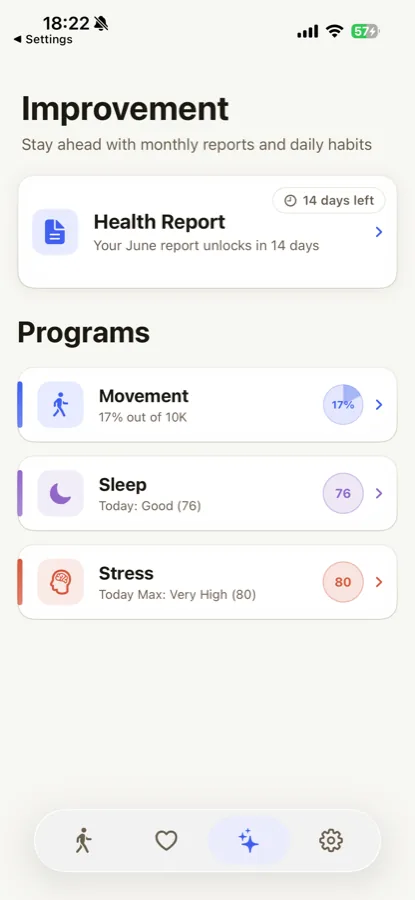
Sam doesn't measure your blood sugar. But movement, sleep, and stress - the habits every diabetes consultation circles back to - are already sitting in your Apple Health data. Sam brings them into view, so you can see how they're really trending.
Your data
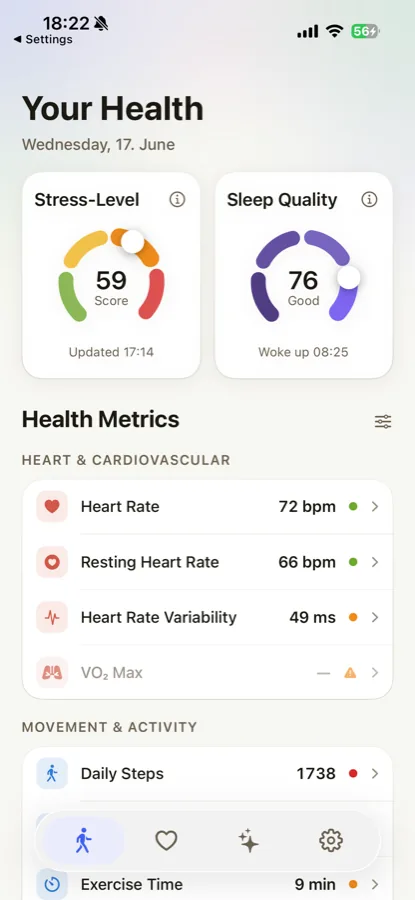
Your wearable already captures them. Sam reads them from Apple Health and shows you how they shift against your personal baseline.
Sam reads the data your wearable already writes to Apple Health and compares it to your personal baseline - understandable, not a wall of numbers.
Regular physical activity improves insulin sensitivity - this is well established. Sam shows you, without a logbook, how much movement your weeks actually contain.
Too little or irregular sleep has been linked in studies to less favorable metabolic markers. Sam shows your sleep duration and timing as a trend, so you can spot the patterns.
Sam's programs for movement, sleep, and stress use scientifically validated questionnaires and small daily goals - built for habits you can actually keep up.
Sam is a wellness companion, not a medical device. The app does not diagnose, treat, cure, or prevent any illness and does not replace medical advice. Consult a qualified healthcare professional for medical decisions.
Sam translates your numbers into clear answers and a report you can take with you.
Instead of interpreting charts, you ask questions - Sam answers from your own numbers. For example:

The monthly PDF report sums up your weeks objectively - for appointments, applications, or simply your own record.
Monthly Report - June
Your Health Overview
Ruhepuls
Aktivität
Beispielwerte. Dein Bericht basiert auf deinen eigenen Daten - automatisch, ohne Tagebuch.
Further reading: what wearable data can show about everyday life with Type 2 Diabetes - and where its limits are.
How to set up Sam if you have Type 2 Diabetes, which metrics matter, and how to prepare a report for your next diabetes clinic appointment.
Apple has pursued non-invasive blood glucose monitoring for years. Here's what actually works today, why the FDA still hasn't cleared a single smartwatch for this capability, and what it means for you if you have type 2 diabetes.
The latest national treatment guideline for type 2 diabetes names movement and sleep as a core part of treatment. Here's what that means for your daily life.
A wearable won't measure your blood sugar. But sleep, activity, and resting heart rate are closely linked to insulin sensitivity. Here's what the research shows and how to make sense of your Apple Health data.
No. Sam doesn't read glucose values and doesn't replace a meter or sensor. Instead, it shows the everyday factors alongside it: movement, sleep, stress, and resting heart rate as trends.
Your diabetes care team decides your treatment. Treatment guidelines consistently recommend movement as part of the foundation of care, and sleep and stress management are increasingly part of that picture too - Sam makes exactly these habits visible and easier to change.
That's up to you. The monthly PDF report summarizes your trends and you can bring it to your appointment. Your data stays with you - Sam is GDPR-compliant and built in Europe.
HbA1c reflects your average blood sugar over roughly the past three months - which is why Sam's view of your daily life centers on that same 90-day window. How often you get tested is something your diabetologist decides for you individually; testing every three to six months is typical.
Yes. Acute and chronic stress can raise blood sugar through stress hormones like cortisol and adrenaline, which blunt how well insulin works. Sam doesn't read blood sugar values, but its stress program uses a scientifically validated questionnaire that helps you make sense of demanding stretches - as a starting point for conversation, not a medical assessment.
Download Sam for free, connect Apple Health, and see what your data says about everyday life with Type 2 Diabetes - compared to your own baseline.
Sam is a wellness companion, not a medical device. Sam does not diagnose, treat, cure, or prevent any illness and does not replace medical advice. For health questions or concerns, always consult a qualified medical professional.