3 min read
POTS, Long COVID, and ME/CFS: How They Connect
POTS often occurs alongside Long COVID, ME/CFS, and hypermobility disorders, but each is a separate diagnosis. The exact combination determines whether structured exercise helps or harms you.
Living with POTS
With POTS, your heart rate jumps sharply when you stand up - often felt as a racing heart and dizziness. People living with POTS tend to know their heart rate better than most. Sam puts your wearable data into context: How is your resting heart rate trending? How are you sleeping? What's changed this week, compared with your own baseline?
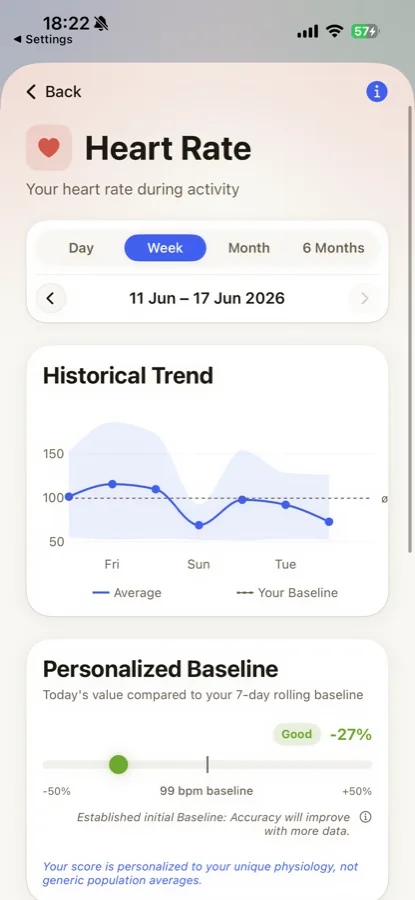
Your data
Your wearable already captures them. Sam reads them from Apple Health and shows you how they shift against your personal baseline.
Sam reads the data your wearable already writes to Apple Health and compares it to your personal baseline - understandable, not a wall of numbers.
With POTS, heart rate can swing widely throughout the day - a single reading can be misleading. Sam looks at the bigger picture over weeks: resting heart rate, HRV, and sleep compared with your personal baseline.
Sleep, heat, stress: many people with POTS notice their circulation responds to these everyday factors. Sam's weekly overview helps you spot your own patterns and bring them to your doctor.
POTS can be hard to explain, even to your care team. Instead of relying on memory, Sam's monthly PDF report shows concrete trends from your everyday life.
Sam is a wellness companion, not a medical device. The app does not diagnose, treat, cure, or prevent any illness and does not replace medical advice. Consult a qualified healthcare professional for medical decisions.
Sam translates your numbers into clear answers and a report you can take with you.
Instead of interpreting charts, you ask questions - Sam answers from your own numbers. For example:

The monthly PDF report sums up your weeks objectively - for appointments, applications, or simply your own record.
Monthly Report - June
Your Health Overview
Schlaf
Gesundheitsstatus
Beispielwerte. Dein Bericht basiert auf deinen eigenen Daten - automatisch, ohne Tagebuch.
Further reading: what wearable data can show about everyday life with POTS - and where its limits are.
POTS often occurs alongside Long COVID, ME/CFS, and hypermobility disorders, but each is a separate diagnosis. The exact combination determines whether structured exercise helps or harms you.
See how your pulse responds when you stand up, using Apple Watch, learn which values are worth bringing to your doctor, and see how Sam makes your daily heart rate, sleep, and activity data easier to understand.
Structured exercise programs, increased salt and fluid intake, and compression clothing are evidence-based first-line treatments for POTS. Here's what that means and how it differs from PEM.
POTS is defined by your heart rate response when you stand up. What the Schellong test and NASA Lean test measure, which heart rate values count as indicators, and what a wearable can actually tell you.
No. Diagnosis belongs in the hands of a doctor - typically using a stand test or tilt table test. Sam doesn't provide diagnoses; it shows you long-term trends in your wearable data.
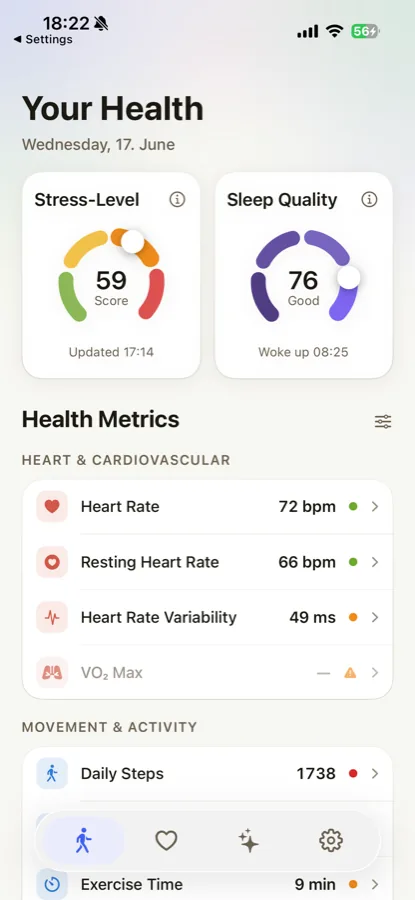
Sam reads data like resting heart rate, HRV, sleep, and activity from Apple Health and compares them with your personal baseline from recent weeks. Sam doesn't capture the momentary heart rate spike you get right when you stand up - your watch's real-time display is there for that.
Sam analyzes whatever data your wearable measures, regardless of medication. Keep in mind that medications can affect heart rate and HRV. Your baseline reflects you as you currently are; any changes to your treatment should be discussed with your doctor.
A racing heart (tachycardia) on standing is the core symptom, often accompanied by dizziness, lightheadedness, heart palpitations, headaches, nausea, brain fog (trouble concentrating), heat intolerance, and pronounced fatigue. How severe the symptoms are and which ones show up varies a lot from person to person - whether it's actually POTS is something only a doctor can determine.
For an active stand test, any watch with a real-time heart rate display will do - that works independently of Sam. For everyday tracking with Sam, any wearable that syncs with Apple Health works well, such as Apple Watch, Oura, Whoop, or Garmin, paired with an iPhone.
Whether and how you can work or exercise with POTS is highly individual - it depends on severity, any co-occurring conditions, and your personal situation. For uncomplicated POTS, structured exercise is considered an evidence-based first-line therapy that can help you gradually build up your tolerance together with your care team - more on this in the article 'Living with POTS'.
Download Sam for free, connect Apple Health, and see what your data says about everyday life with POTS - compared to your own baseline.
Sam is a wellness companion, not a medical device. Sam does not diagnose, treat, cure, or prevent any illness and does not replace medical advice. For health questions or concerns, always consult a qualified medical professional.