4 min read
Migraine vs. Tension Headache: Key Differences
Migraine vs tension headache: Learn the duration, symptoms, and triggers. Migraines last 4-72 hours; tension headaches are shorter. Discover when to see a doctor.
Living with Migraine
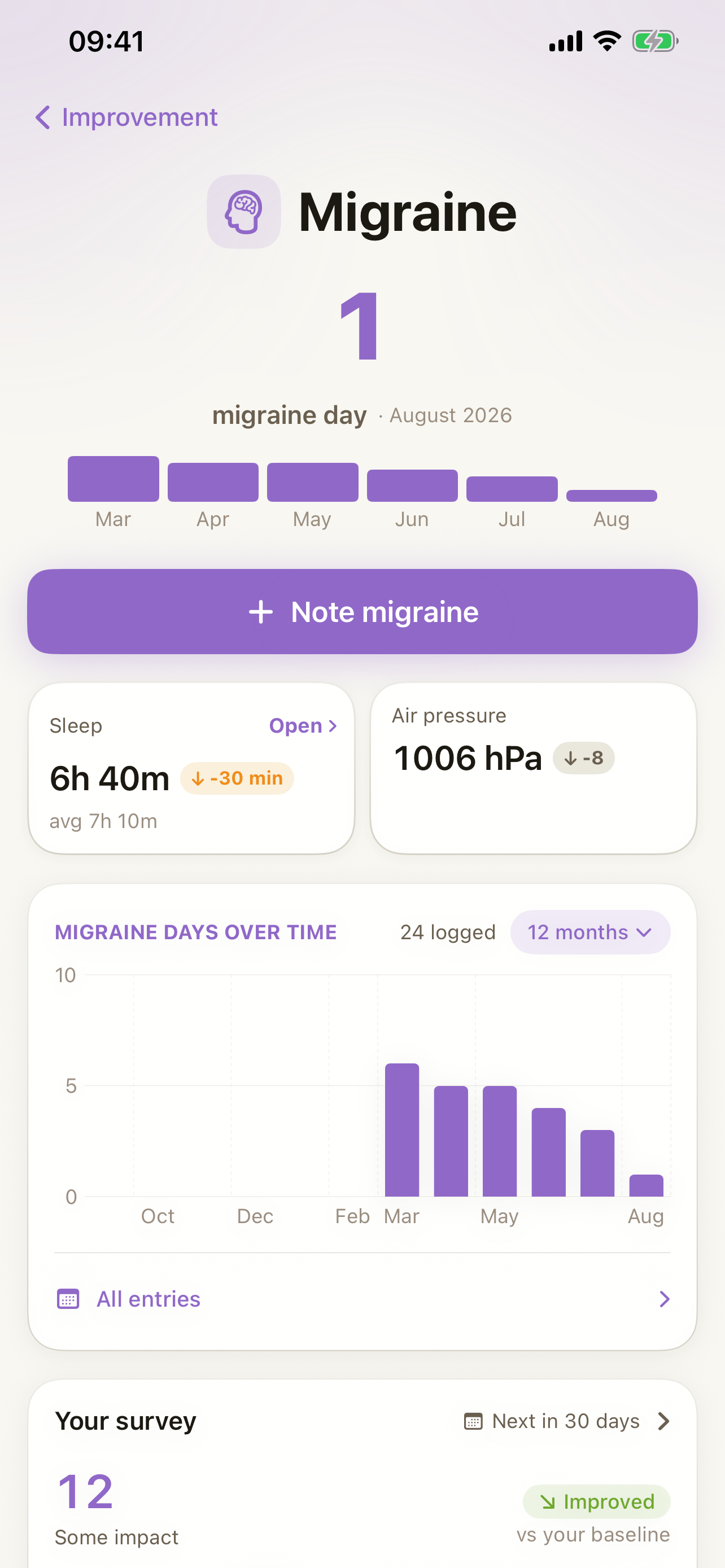
Sam shows your sleep, stress, HRV, and activity trends against your personal baseline, so you can spot what matters and bring that context to your neurologist or doctor. Sam doesn't detect or predict migraine attacks - no wearable can.
Your data
Your wearable already captures them. Sam reads them from Apple Health and shows you how they shift against your personal baseline.
Sam reads the data your wearable already writes to Apple Health and compares it to your personal baseline - understandable, not a wall of numbers.
Migraine triggers are different for everyone. By comparing your sleep, stress, and activity data to your own migraine diary, you can discover patterns unique to you. This helps you and your neurologist understand what you should focus on.
Neurologists ask about sleep and stress because these matter for migraine treatment. Bringing three months of consistent Apple Health data to your appointment gives your doctor concrete context for planning your care, rather than relying on memory.
A regular sleep schedule is one of the most evidence-backed non-drug strategies for migraine. Sam makes it easy to see when you've drifted from your baseline sleep time or consistency, so you can return to the rhythm that works for you.
Sam is a wellness companion, not a medical device. The app does not diagnose, treat, cure, or prevent any illness and does not replace medical advice. Consult a qualified healthcare professional for medical decisions.
Sam translates your numbers into clear answers and a report you can take with you.
Instead of interpreting charts, you ask questions - Sam answers from your own numbers. For example:

The monthly PDF report sums up your weeks objectively - for appointments, applications, or simply your own record.
Monthly Report - June
Your Health Overview
Sleep
Stress level
Beispielwerte. Dein Bericht basiert auf deinen eigenen Daten - automatisch, ohne Tagebuch.
Further reading: what wearable data can show about everyday life with Migraine - and where its limits are.
Migraine vs tension headache: Learn the duration, symptoms, and triggers. Migraines last 4-72 hours; tension headaches are shorter. Discover when to see a doctor.
Set up Apple Health to track migraine frequency, duration, and potential triggers. Learn how digital tracking supports conversations with your doctor and reveals your personal patterns.
Learn how sleep disruption, stress, and daily patterns relate to migraine. A guide to tracking your own triggers and patterns with your Apple Watch.
Explore how sleep consistency and heart-rate patterns in Apple Health data may connect to your migraine—and how to use that information with your doctor.
No. No wearable can reliably predict a migraine attack before it starts. Sam shows trends in sleep, stress, and activity that you might correlate with your own experience, but these are observations over weeks and months, not predictions of individual attacks.
Sleep loss and irregular sleep schedules are among the most common migraine triggers. Neurologists recommend maintaining a consistent sleep-wake rhythm as a first-line non-drug measure. Sam helps you track whether your sleep has remained stable.
No. Your own migraine diary (logging the date, time, and severity of attacks, plus any triggers you notice) is the clinical standard that your neurologist will review. Sam's sleep and stress data can complement your diary by showing the bigger picture.
No. While an Apple Watch can detect some physiological changes (like irregular heart rate), it cannot reliably identify a migraine attack. Only you, the person experiencing it, can report that you're having a migraine.
Write down what you observe and share it with your neurologist at your next appointment. For example, 'I notice more migraines after high-stress weeks' is valuable clinical information. Your doctor can help you explore whether that pattern is meaningful for your care.
Yes. Consistent sleep routines can significantly reduce migraine frequency for many people, though results vary individually. Every person with migraine is different. Talk to your neurologist about which lifestyle changes make sense for you. They'll guide what to try and how to measure whether it helps.
Download Sam for free, connect Apple Health, and see what your data says about everyday life with Migraine - compared to your own baseline.
Sam is a wellness companion, not a medical device. Sam does not diagnose, treat, cure, or prevent any illness and does not replace medical advice. For health questions or concerns, always consult a qualified medical professional.