2 min read
Gout or Rheumatoid Arthritis? Key Differences
Gout and rheumatoid arthritis both affect the joints but follow different patterns. Learn the differences and which specialist can help you sort it out.
Living with Gout
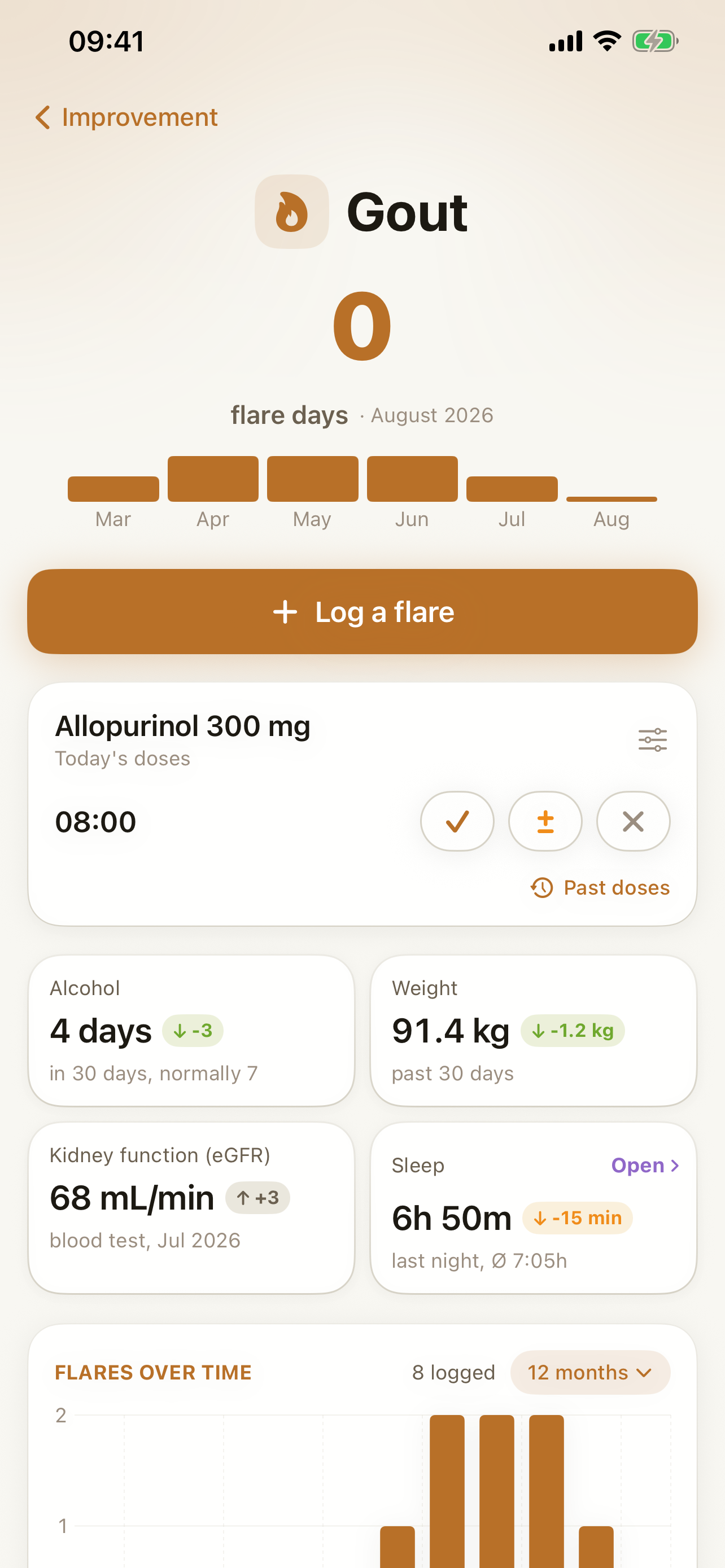
Sam tracks the health signals that matter: your movement, sleep, alcohol intake, and stress, all against your personal baseline. Every month, your Apple Health trends are compiled into a PDF report, turning data into talking points with your rheumatologist. Sam doesn't automatically detect gout flares or measure uric acid levels - no wearable can do either.
Your data
Your wearable already captures them. Sam reads them from Apple Health and shows you how they shift against your personal baseline.
Sam reads the data your wearable already writes to Apple Health and compares it to your personal baseline - understandable, not a wall of numbers.
When gout flares hit, it can be hard to recall what triggered them. Was it a heavy meal? A night of drinking? Dehydration? Stress? Sam tracks your movement, alcohol intake, and stress levels all in one place. Over time, patterns emerge: you might notice you flare 2-3 days after alcohol, or that flares cluster after stressful weeks. That information is valuable in a conversation with your rheumatologist.
Each month, Sam compiles your Apple Health data into a PDF report you can share with your doctor. Instead of relying on memory, you'll have a clear picture of your activity, sleep, stress, and other factors that affect your health between flares. Your rheumatologist can use this context to make better decisions about your urate-lowering therapy and flare management strategy.
Between flares, you're often symptom-free, but knowing your normal movement, sleep, and stress is crucial for spotting changes. When something shifts (you're walking less, sleeping poorly, feeling stressed), you can take action: increase water intake, ease back on known triggers, or contact your doctor proactively to discuss how these changes fit your gout management strategy. Sam keeps your baseline visible so changes stand out immediately.
Sam is a wellness companion, not a medical device. The app does not diagnose, treat, cure, or prevent any illness and does not replace medical advice. Consult a qualified healthcare professional for medical decisions.
Sam translates your numbers into clear answers and a report you can take with you.
Instead of interpreting charts, you ask questions - Sam answers from your own numbers. For example:

The monthly PDF report sums up your weeks objectively - for appointments, applications, or simply your own record.
Monthly Report - June
Your Health Overview
Mobility
Health status
Beispielwerte. Dein Bericht basiert auf deinen eigenen Daten - automatisch, ohne Tagebuch.
Further reading: what wearable data can show about everyday life with Gout - and where its limits are.
Gout and rheumatoid arthritis both affect the joints but follow different patterns. Learn the differences and which specialist can help you sort it out.
Build a simple gout flare diary using Sam and Apple Watch. Log each attack and connect it to your health data for more productive rheumatologist conversations.
Learn what triggers gout flares - from alcohol and purine-rich foods to dehydration and stress - and how to identify your personal patterns.
Track sleep, activity, and stress through Apple Health to identify your personal gout triggers and prepare for doctor conversations.
No. No wearable can detect a gout flare or predict when one will happen. Flares start with acute joint inflammation that happens inside your body. What Sam can do is help you track patterns in your lifestyle (alcohol, diet, hydration, stress) so you recognize your personal triggers and are better prepared for conversations with your doctor.
Sudden hot, swollen, red joints, especially if accompanied by fever, can indicate several conditions, including gout, but also infection (septic arthritis). Do not assume it's gout without a doctor's assessment. Seek urgent care to rule out infection, especially if this is your first flare or if you have a fever. A rheumatologist or your GP can confirm the diagnosis.
No. Uric acid levels require a blood test ordered by your doctor. That's the only way to know if your urate-lowering therapy (like allopurinol) is working. Sam cannot measure uric acid, and neither can any consumer wearable. If you're on therapy, your doctor will order periodic blood tests to monitor your progress.
No. Gout flares aren't auto-detected. You'll need to manually log them (date, joint, what came before). Sam automatically tracks your Apple Health data (steps, sleep, stress). Keep a simple gout flare diary (date, joint, what triggered it) and combine it with your Apple Health trends in your monthly report for your doctor.
Sam shows you your daily Apple Health data (steps, sleep, stress, heart rate) so you can spot trends week to week. Your monthly PDF report compiles all of that into one summary you can download and share with your doctor. You don't need to manually export or screenshot anything; the report is generated automatically and ready to print or email to your healthcare team.
If your flares aren't improving despite urate-lowering therapy, that's a conversation for your rheumatologist. Don't adjust your medication on your own. Your doctor may order blood uric acid tests to see if your dose is optimal, or explore other factors (diet, adherence, medication interactions) or additional therapies. Bring your Sam data and any flare notes you've kept; context helps your doctor make the best decision for your care.
Download Sam for free, connect Apple Health, and see what your data says about everyday life with Gout - compared to your own baseline.
Sam is a wellness companion, not a medical device. Sam does not diagnose, treat, cure, or prevent any illness and does not replace medical advice. For health questions or concerns, always consult a qualified medical professional.