5 min read
Seizure vs Fainting: Key Differences Explained
Seizures and fainting look similar but have different causes and risk factors. Learn the key observable differences and why accurate reporting matters for your doctor.
Living with Epilepsy
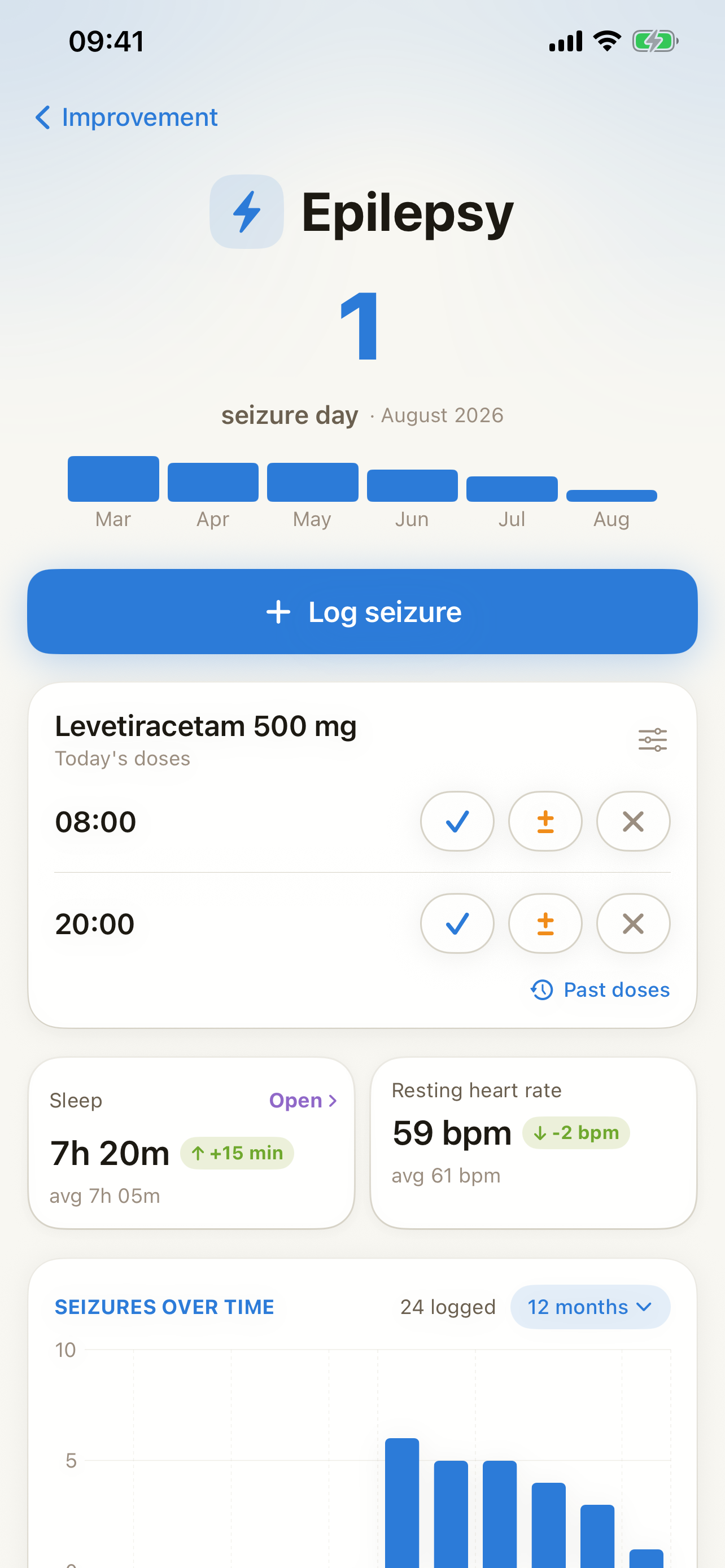
Sam shows your Apple Health trends in sleep, stress, activity, and alcohol against your personal baseline, helping you spot patterns to discuss with your neurologist. Sam does not detect, predict, or sense seizures - no consumer wearable can reliably do this.
Your data
Your wearable already captures them. Sam reads them from Apple Health and shows you how they shift against your personal baseline.
Sam reads the data your wearable already writes to Apple Health and compares it to your personal baseline - understandable, not a wall of numbers.
Sleep disruption is the most recognized trigger for seizures. Sam tracks when you sleep less, sleep inconsistently, or miss a full night and shows the pattern across weeks. Instead of guessing whether that bad sleep the night before a seizure was a coincidence, you have a complete record to compare.
Stress triggers seizures for many people with epilepsy. By logging your stress levels day by day, Sam helps you see whether busy weeks, work deadlines, or emotional events cluster near your seizures. That data (whether it's there or not) informs conversations with your neurologist.
Seizure triggers rarely come alone. It's often the combination: poor sleep plus stress, or stress plus missed medication, or alcohol plus fatigue. Apple Health data from Sam shows you multiple signals at once (sleep, activity, stress, alcohol) so you can spot the pattern unique to you and report it to your care team.
Sam is a wellness companion, not a medical device. The app does not diagnose, treat, cure, or prevent any illness and does not replace medical advice. Consult a qualified healthcare professional for medical decisions.
Sam translates your numbers into clear answers and a report you can take with you.
Instead of interpreting charts, you ask questions - Sam answers from your own numbers. For example:

The monthly PDF report sums up your weeks objectively - for appointments, applications, or simply your own record.
Monthly Report - June
Your Health Overview
Sleep
Stress level
Beispielwerte. Dein Bericht basiert auf deinen eigenen Daten - automatisch, ohne Tagebuch.
Further reading: what wearable data can show about everyday life with Epilepsy - and where its limits are.
Seizures and fainting look similar but have different causes and risk factors. Learn the key observable differences and why accurate reporting matters for your doctor.
Learn how to build a seizure diary, track triggers, and organize health data to support better conversations with your neurologist and effective care planning.
Learn how sleep, stress, and daily routines affect seizure frequency. Discover practical strategies for tracking triggers and working with your neurologist.
Sleep deprivation is one of the strongest seizure triggers. Learn to track your sleep and identify your personal risk patterns for better doctor appointments.
No, no consumer wearable, including Apple Watch, can reliably detect seizures. Specialized medical-grade devices exist in research and clinical settings for certain seizure types, but they are not available to consumers. Sam and similar wellness apps track your health trends, not the seizure itself. If you've had a seizure, your smartwatch data on sleep, stress, and heart rate beforehand can help your doctor understand the context, but it cannot predict or detect the seizure as it happens.
The most common seizure triggers are sleep deprivation, missed medication, stress, illness or fever, and for about 3-5% of people, flashing lights or specific visual patterns. However, triggers vary widely from person to person, and your neurologist can help you identify which triggers matter most for you. Alcohol, menstrual cycle changes, and caffeine can also trigger seizures for some.
Yes, seizure diaries are recommended by neurologists and epilepsy guidelines as a standard tool for follow-up care. You typically record the date, time, duration, and suspected trigger for each seizure. This information helps your doctor spot patterns, adjust medication, and understand what might be contributing. Apple Health data from Sam (sleep, stress, activity, alcohol) gives you a baseline to compare against when filling out your seizure diary.
No, no app can prevent seizures. Seizure prevention depends on your epilepsy type, your medication regimen, and working with your neurologist. What Sam can do is help you understand your personal trends and potential triggers (sleep quality, stress levels, activity, and alcohol use). If you spot a pattern like 'my seizures often follow nights with less than 5 hours of sleep', you can share that with your doctor to inform your treatment plan or lifestyle adjustments. But prevention itself comes from your medication and medical care, not from tracking.
Your Apple Watch is not an emergency device and should not be your only safety measure. If you have seizures, talk to your doctor about emergency action plans and whether alerting devices (like medical bracelets or specialized seizure alert systems) are right for you. After a seizure, the data from your watch (like elevated heart rate or lack of movement) can provide context for your seizure diary and discussions with your care team, but it is not a substitute for professional emergency care. Always prioritize your safety first.
No, epilepsy is very individual. There are many types of epilepsy with different causes, triggers, seizure patterns, and treatment responses. Two people with epilepsy can have completely different seizure triggers, medication needs, and risk factors. This is why working closely with a neurologist who knows your specific type of epilepsy is important. Tracking your personal trends with Sam helps you and your doctor understand what matters for you. Your care plan should always be tailored to your specific epilepsy, not based on general information or what works for others.
Download Sam for free, connect Apple Health, and see what your data says about everyday life with Epilepsy - compared to your own baseline.
Sam is a wellness companion, not a medical device. Sam does not diagnose, treat, cure, or prevent any illness and does not replace medical advice. For health questions or concerns, always consult a qualified medical professional.