5 min read
Asthma or COPD? Understanding the key differences
Asthma and COPD are distinct diseases despite similar symptoms. Discover their different triggers, progression, and how doctors distinguish them.
Living with Asthma
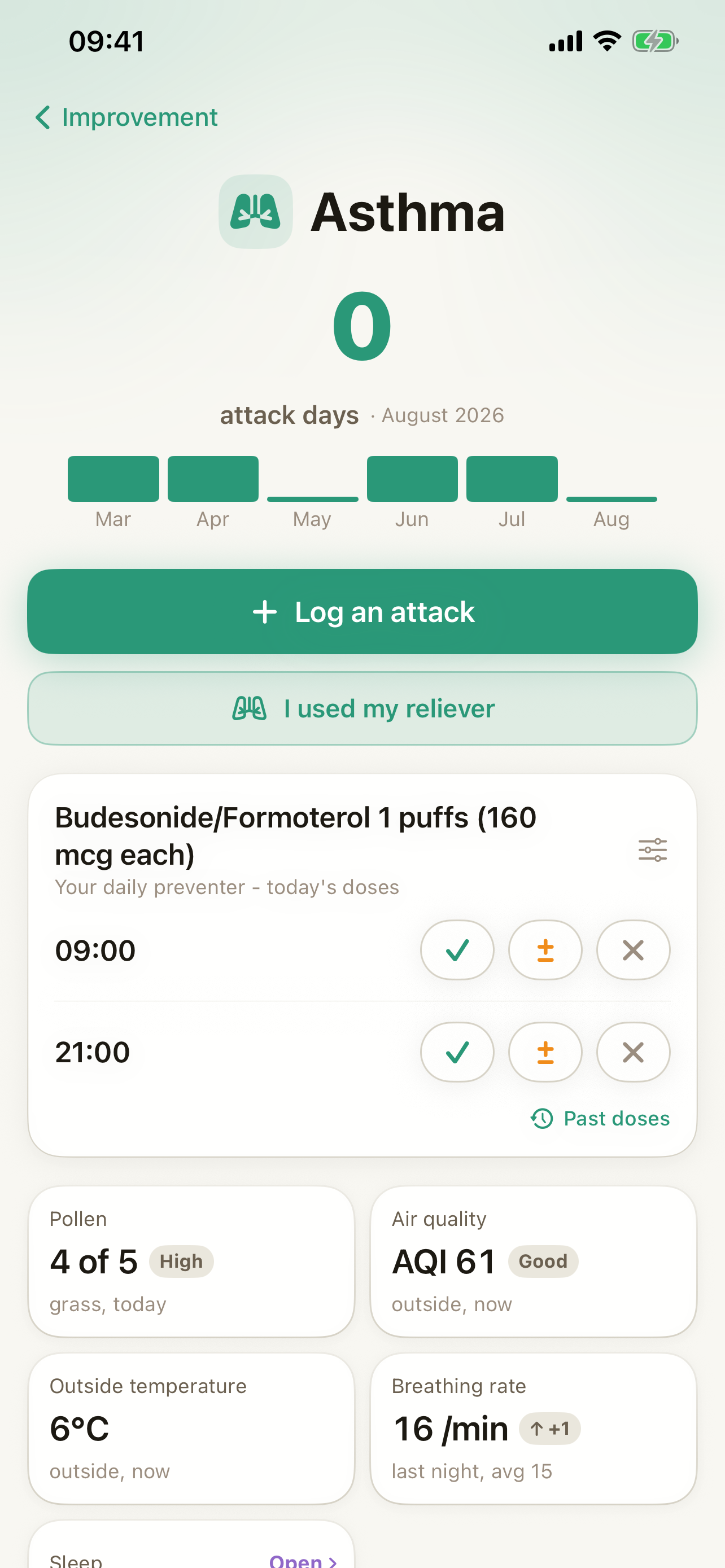
Sam automatically compiles your Apple Health trends in sleep, respiratory rate, stress, and activity into a monthly PDF report. Paired with your own symptom diary, that gives your doctor real context for treatment decisions. Sam doesn't detect asthma attacks or measure lung function - no smartwatch can.
Your data
Your wearable already captures them. Sam reads them from Apple Health and shows you how they shift against your personal baseline.
Sam reads the data your wearable already writes to Apple Health and compares it to your personal baseline - understandable, not a wall of numbers.
Asthma often disrupts sleep: more wakings, shorter nights, changes in rhythm. Sam shows your nightly sleep duration, interruptions, and respiratory rate patterns. Over weeks, you see your baseline. When nights feel worse, you notice it in the data, and can log what happened in your symptom diary. This gives you something concrete to discuss with your doctor.
Exercise, stress, certain activity levels, seasonal changes. These are common asthma triggers, and they look different for everyone. Sam tracks your stress levels, exertion zones, and daily activity from Apple Health. By comparing these signals against your own symptom notes, you build a personal map of what affects you. You can discuss that with your doctor when reviewing or refining your asthma action plan.
Sam compiles your entire month of Apple Health data into a ready-to-share PDF report, automatically. No manual export needed. Bring this to your appointments alongside your symptom diary. Your doctor gets a clear picture of your baseline trends and patterns, so every conversation about your asthma is grounded in real data.
Sam is a wellness companion, not a medical device. The app does not diagnose, treat, cure, or prevent any illness and does not replace medical advice. Consult a qualified healthcare professional for medical decisions.
Sam translates your numbers into clear answers and a report you can take with you.
Instead of interpreting charts, you ask questions - Sam answers from your own numbers. For example:

The monthly PDF report sums up your weeks objectively - for appointments, applications, or simply your own record.
Monthly Report - June
Your Health Overview
Respiratory rate
Activity
Beispielwerte. Dein Bericht basiert auf deinen eigenen Daten - automatisch, ohne Tagebuch.
Further reading: what wearable data can show about everyday life with Asthma - and where its limits are.
Asthma and COPD are distinct diseases despite similar symptoms. Discover their different triggers, progression, and how doctors distinguish them.
Keep a complete asthma diary with Apple Watch and Sam. Automatic health tracking, symptom logging, and monthly reports ready to share with your doctor.
Learn how exercise, nocturnal symptoms, and stress trigger asthma. Discover tracking strategies to recognize your personal patterns and prepare for doctor visits.
Nocturnal asthma disrupts sleep. Learn how Apple Watch respiratory rate and sleep data help you understand asthma patterns for better doctor conversations.
No. No consumer wearable can measure lung function or detect an asthma attack. Asthma attacks involve rapid airway constriction that only medical devices like spirometers can measure. What Sam shows you (respiratory rate, sleep disruption, stress levels) are signals you can track over time, but they don't diagnose or predict attacks. Your symptom awareness and a written symptom diary are what alert you in the moment. Always follow your doctor's asthma action plan.
Use your rescue inhaler as prescribed by your doctor and seek medical help if symptoms don't improve. This is acute care that an app cannot support. Keep your written asthma action plan accessible at all times, and follow it. Sam is for tracking trends over days and weeks, not managing urgent symptoms.
You log your asthma symptoms directly in Sam, noting when symptoms occurred, what triggered them, what helped, and how they affected your day. Sam also automatically pulls your Apple Health data (sleep, respiratory rate, stress, activity) so you can bring everything organized to your doctor for the complete picture.
No. Your written asthma action plan, created with your doctor, is your medical guide. It tells you which medications to use, when, and what to do if symptoms worsen. Sam is a companion tool that helps you see your own patterns and trends, so you can follow your action plan more effectively and have better conversations with your doctor. Always prioritize your doctor's prescribed treatment.
Yes, it can help. Stress is a known trigger for many people with asthma. Sam tracks your stress levels so you can notice patterns. For example, whether high-stress weeks correlate with more symptoms (which you log in your diary). This awareness can support stress-management habits like regular movement or better sleep, both of which benefit overall health. But managing asthma itself requires your doctor's guidance. Talk with your healthcare provider about stress-specific triggers and strategies for you.
Weekly is a reasonable rhythm. Check your overnight average and whether it's shifted from your personal baseline. But respiratory rate is just one signal and doesn't indicate whether your asthma is controlled or not. Your actual symptoms, peak flow if you measure it, and your doctor's assessment are what matter. If you notice consistent changes in respiratory rate alongside symptoms, that's worth mentioning to your healthcare provider.
Download Sam for free, connect Apple Health, and see what your data says about everyday life with Asthma - compared to your own baseline.
Sam is a wellness companion, not a medical device. Sam does not diagnose, treat, cure, or prevent any illness and does not replace medical advice. For health questions or concerns, always consult a qualified medical professional.