5 min read
Cold or Allergies: How to Tell the Difference
Learn how to distinguish between a cold and allergic rhinitis by symptom pattern and timeline. See why your sleep data matters for understanding your health.
Living with Allergic Rhinitis
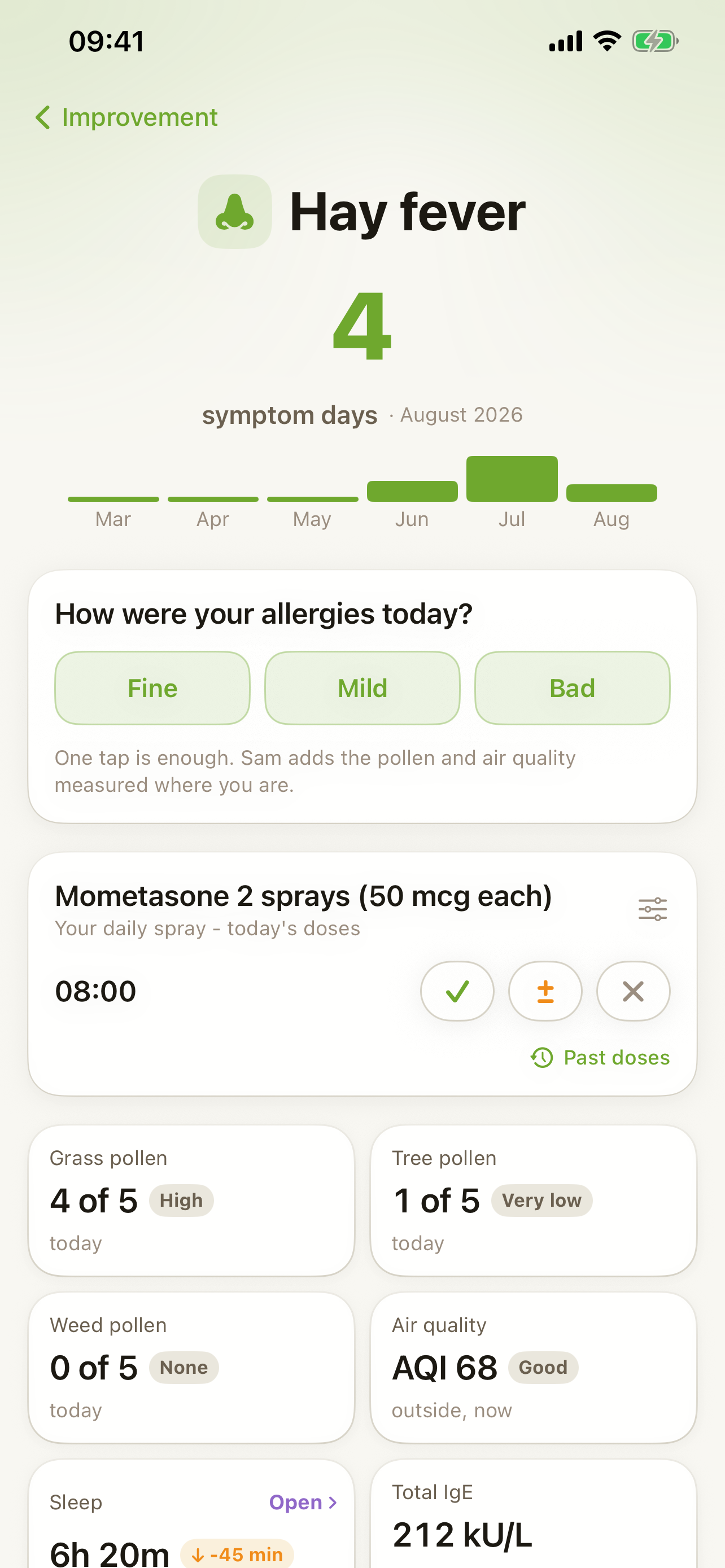
Sam shows you what Apple Health already records: sleep, outdoor activity, breathing rate, and resting heart rate, plus stress patterns estimated from heart rate variability. These signals often shift alongside your symptoms. Paired with a simple note of when symptoms flare, they give your allergist concrete data instead of vague recollection. Sam does not detect allergic reactions and does not replace allergy testing or medication.
Your data
Your wearable already captures them. Sam reads them from Apple Health and shows you how they shift against your personal baseline.
Sam reads the data your wearable already writes to Apple Health and compares it to your personal baseline - understandable, not a wall of numbers.
Nasal congestion is one of the most common causes of sleep disruption in allergic rhinitis, and poor sleep affects your whole day. Sam tracks sleep quality and duration from your Apple Watch, showing you how your nights are trending compared to your baseline. When you notice symptoms flaring, you'll have concrete data to bring to your allergist instead of relying on memory.
Many people with allergic rhinitis notice their symptoms cluster around certain activities or seasons. More time outdoors or predictable pollen months often correlate with symptom patterns. Sam shows your outdoor activity, stress levels, and breathing rate trends during sleep, making patterns clear that might otherwise escape notice. This gives you concrete observations to discuss with your doctor regarding your environment and symptoms.
Instead of guessing how bad last month was, Sam automatically compiles your sleep, stress, activity, and breathing trends into a monthly PDF. Take this to your appointment along with your notes on when symptoms flared, giving your allergist a complete picture of your everyday patterns and symptom timing.
Sam is a wellness companion, not a medical device. The app does not diagnose, treat, cure, or prevent any illness and does not replace medical advice. Consult a qualified healthcare professional for medical decisions.
Sam translates your numbers into clear answers and a report you can take with you.
Instead of interpreting charts, you ask questions - Sam answers from your own numbers. For example:

The monthly PDF report sums up your weeks objectively - for appointments, applications, or simply your own record.
Monthly Report - June
Your Health Overview
Respiratory rate
Activity
Beispielwerte. Dein Bericht basiert auf deinen eigenen Daten - automatisch, ohne Tagebuch.
Further reading: what wearable data can show about everyday life with Allergic Rhinitis - and where its limits are.
Learn how to distinguish between a cold and allergic rhinitis by symptom pattern and timeline. See why your sleep data matters for understanding your health.
Use Apple Watch and Sam to track allergic rhinitis patterns, build a symptom diary, and share data-backed insights with your allergist at every appointment.
Allergic rhinitis disrupts sleep and energy during pollen season. Learn how to track symptoms and support your wellbeing with Apple Health and Sam.
Allergic rhinitis disrupts sleep quality. Learn what Apple Health metrics reveal about your sleep patterns and how to prepare for doctor conversations.
No. Sam cannot detect or predict allergic reactions. No wearable can. Sam shows trends in sleep, stress, breathing, and outdoor activity from Apple Health. What those shifts mean (whether allergic reaction, cold, or something else) is for you and your doctor to assess together.
No. Sam has no access to environmental data like pollen counts or air quality indexes. Those come from separate services. What Sam shows is your own behavior: how much time you spent outdoors, how your sleep changed, whether your stress level shifted. For pollen data, check weather apps or dedicated air-quality apps. Sam helps you correlate your symptoms with your own patterns.
That's for your doctor or allergist to determine. Allergic rhinitis is typically diagnosed by history (when symptoms occur), physical exam, and sometimes allergy testing, not by a wearable. An allergist can test for specific allergens you react to. Sam can't diagnose, but it can help you track when your symptoms occur and what's happening in your life (sleep, stress, outdoor time) to discuss with your doctor.
Your allergist and current treatment guidelines (such as ARIA, the Allergic Rhinitis and its Impact on Asthma guidelines) typically recommend allergen avoidance when you know your triggers, along with first-line medications like antihistamines. Whether you need to adjust your outdoor time, adjust your medication timing, or consider other treatments like nasal sprays should be worked out with your allergist based on your own response. Sam helps you spot your personal patterns by keeping sleep and activity trends visible.
Sam doesn't measure medication effectiveness, but it does show relevant trends: whether your sleep is improving, whether you're able to stay more active, whether your stress level is stable. Together with your own observation of when symptoms flare (which you'd note manually), these trends give your allergist a fuller picture of how your current treatment is working in real life. Any changes to your medication are your allergist's call.
Many people experience both, linked by what researchers call unified airway disease. Sam doesn't have a dedicated asthma program and cannot detect asthma or asthma attacks. The data it shows (sleep quality, breathing rate, stress, activity, and resting heart rate) can be relevant to overall airway health and your day-to-day well-being. For asthma specifically, consult your pulmonologist or allergist for diagnosis and management.
Download Sam for free, connect Apple Health, and see what your data says about everyday life with Allergic Rhinitis - compared to your own baseline.
Sam is a wellness companion, not a medical device. Sam does not diagnose, treat, cure, or prevent any illness and does not replace medical advice. For health questions or concerns, always consult a qualified medical professional.